AI Engineering
Data centers are often discussed alongside industrial real estate
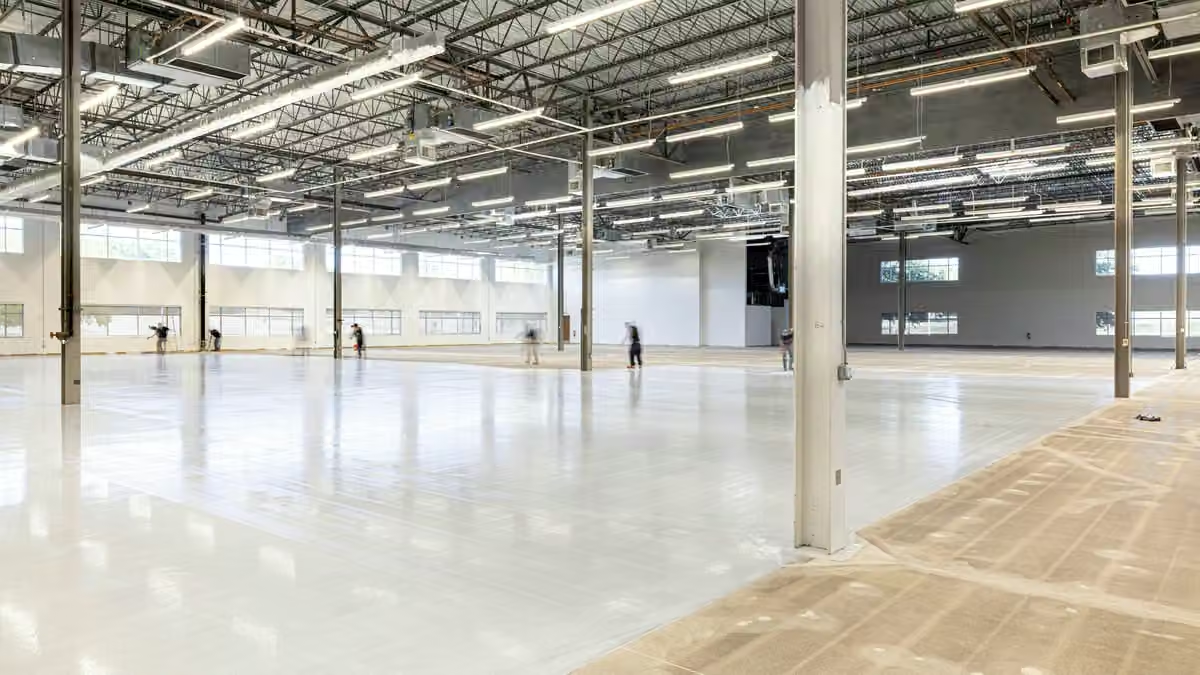
Industrial real estate is property used to make, store, move, or support physical goods. It includes warehouses, distribution centers, factories, cold-storage buildings, repair sites, and flexible industrial spaces. Data centers are often discussed alongside this sector because they need large sites, strong power service, cooling, and network access.
The main point is simple: industrial property supports the physical side of the economy. Software may manage an order, but a building still stores the goods, charges the equipment, or runs the machines.
For AI engineers, this matters because industrial buildings are becoming software systems as well as physical sites. Sensors track temperature, power use, equipment health, and vehicle movement. Robots move goods. Cameras support safety checks. Planning tools forecast demand. Data centers run AI workloads that support other industries.
The building still comes first. Software cannot fix a site with poor access, weak power, low ceilings, or limits on truck traffic.
The building has a job
Industrial real estate is grouped by the work done inside it. A warehouse holds goods. A distribution center sorts and sends goods to other sites. A factory makes products. A cold-storage building keeps food, medicine, or other goods at controlled temperatures.
Some buildings serve several uses. This is often called flex industrial space. It may include storage, light production, offices, testing areas, or repair work.
The physical details shape the building’s value. Important factors include ceiling height, floor strength, loading doors, truck courts, parking, rail access, road access, water supply, and electric capacity. Local rules also matter. A site may look useful but still face limits on noise, traffic, hours, emissions, or expansion.
Location is more than a point on a map. Industrial users often need quick access to customers, ports, highways, airports, workers, or suppliers. A small difference in travel time can affect delivery costs and service levels.
This is why industrial real estate is tied to supply chains. When companies change where they make, store, or source products, their property needs change too.
Why AI engineering enters the picture
The connection to AI engineering is practical. Industrial sites produce large amounts of operational data. That data can come from warehouse systems, factory machines, cameras, delivery records, energy meters, and building controls.
An AI system may help predict when a machine needs service. It may improve the route used by a mobile robot. It may flag a damaged package or estimate how much space a site needs next month.
These systems create real engineering work. Data must be collected from older equipment. Different vendors may use different formats. Network connections may fail. Models must work near the machines, not only in a cloud service. Safety rules can limit how much automation is allowed.
This is where an AI engineer may work with operations teams, building owners, equipment makers, and software vendors. The task is often less about building a model in isolation. It is about fitting that model into a working site.
A useful system must meet several tests:
- It must use data that is accurate enough for the task.
- It must keep working when sensors or networks fail.
- It must explain alerts to people who run the site.
- It must protect company, worker, and customer data.
- It must show whether the result saves time, reduces waste, or improves safety.
A model that scores well in a test environment may still fail in a busy warehouse. Dust, heat, poor lighting, moving equipment, and changing layouts can affect results.
Demand is real, but it is not one-way
Industrial property has seen strong interest from logistics, manufacturing, online retail, and third-party logistics firms. Third-party logistics, or 3PL, firms store and move goods for other companies. They have been a large source of leasing demand.
Demand for warehouse space is also linked to supply chain planning. Companies may keep more goods nearby when delays, trade changes, labor problems, or severe weather create risk. That does not mean every market will grow at the same rate.
New supply can change the balance. When many buildings open at once, vacancy can rise and rent growth can slow. Some older buildings may lose tenants if they lack modern power, loading space, clear height, or efficient layouts.
Current market reports point to a shift toward higher-quality industrial sites. They also show that new construction faces limits such as higher costs, delays, and long waits for power service. Data centers face an even sharper power problem in many markets because AI workloads need large amounts of electricity and cooling.
That is one clear limit in the story. A plan for an AI-enabled industrial site may fail before software work begins if the site cannot get enough power, network service, or permits.
What the data does not show
Industrial real estate data often describes large markets in broad terms. It may show leasing volume, vacancy, construction, or rent trends. Those figures do not fully explain one building’s condition or one tenant’s needs.
A new warehouse may have better systems but higher costs. An older site may have a strong location but limited room for upgrades. A data center may have demand from AI users but face long development timelines because of power and construction limits.
There is also uncertainty in technology demand. Automation can increase the value of modern sites, but companies may delay projects when interest rates, trade rules, or customer demand change. AI adoption may grow while specific projects still fail to reach production.
For engineers, this means the work must include basic site facts. What data exists? Who owns it? Which systems can connect? What happens when the model is wrong? Who can stop an automated process? These questions are part of the engineering problem.
Industrial real estate is therefore both a property market and an operating system for physical work. Its buildings support storage, production, delivery, and computing. Its value depends on location and structure, but also on power, data, rules, and daily use.
The clearest view is neither a property story nor an AI story alone. It is a systems problem with buildings at the center. AI engineering roles in this area sit between software, machines, workers, and business goals. The trade-off is plain: better technology can improve a site, but only when the physical site can support it.
That is the kind of connection FDE Alliance Brief follows through AI engineering roles, hiring signals, alliance moves, and useful ecosystem research.
Browse: AI Engineering