Forward Deployed Engineering
Forward Deployed Engineering Puts Code Near Users
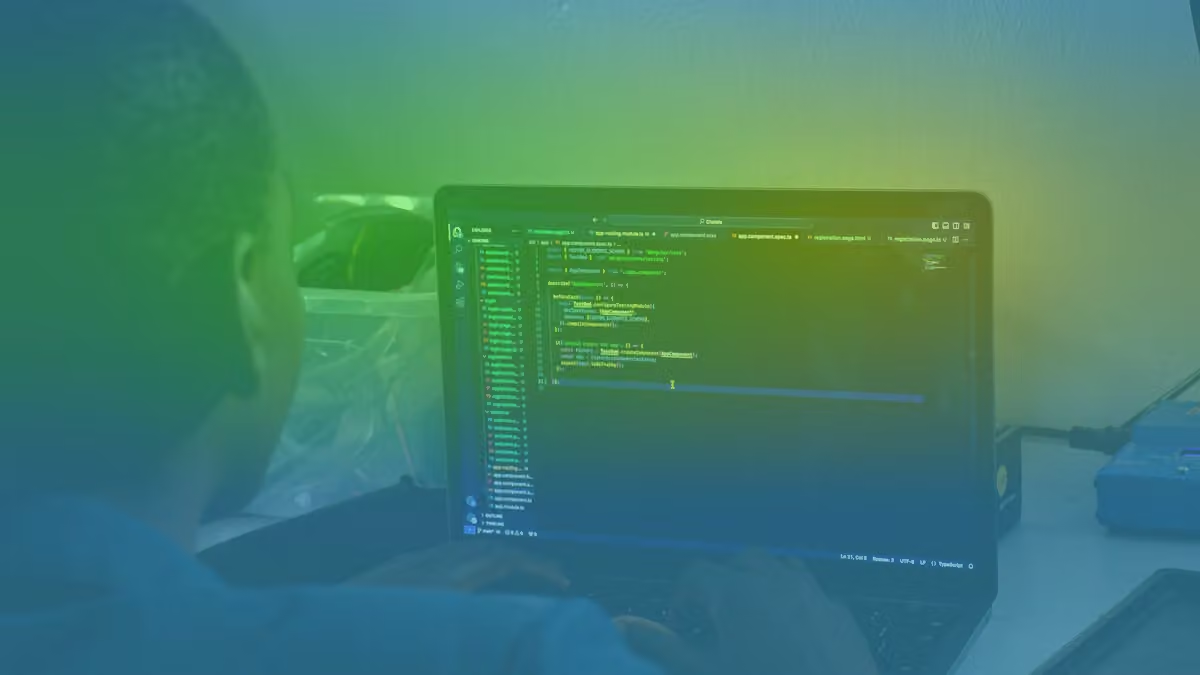
Forward deployed engineering puts code near users. The engineer works close to the people who need the system, often inside a customer team or alongside it. This changes where software work begins. Instead of starting with a fixed product plan, the work starts with a real task, a data problem, or a broken workflow.
That distance matters. A forward deployed engineer, or FDE, must learn how people work before building the system they will use. The role can include software design, data work, testing, deployment, support, and direct talks with technical and business teams. The code still matters, but the code is shaped by daily use.
The phrase “near users” does not mean that an FDE only listens to requests. The engineer turns those requests into a working system. That may mean linking data sources, building an internal app, adding search to a knowledge base, or creating an AI workflow with human review. The work often moves from a rough prototype to a stable production service.
I pause here because the role can sound simpler than it is. Close contact with users does not remove the need for strong engineering. It adds more demands. The FDE must understand the problem, make sound technical choices, explain limits, and keep the system safe and useful after launch.
The distance between a problem and a product
A normal product team may build one shared feature for many customers. A forward deployed team often begins with one customer’s setting. That setting may include old systems, unusual data, strict access rules, and work that is hard to describe in a product ticket.
This changes the first part of the engineering cycle. The FDE spends time asking what the user is trying to do, where the current process fails, and what information is available. The engineer may watch a workflow, review sample data, or run a working session with subject experts. These activities help turn a broad goal into a technical plan.
The first version is often small. It may answer one question, reduce one manual step, or help a team review information faster. Early use gives better evidence than a long list of requested features. Users show where the system helps, where it slows them down, and where its output cannot be trusted.
That feedback can lead to quick changes. An FDE may change a data pipeline, revise an interface, improve search, or add a review step. In an AI system, the work may include testing prompts, checking retrieved documents, tracking errors, and setting rules for human approval.
The code stays close to the user because the engineer sees these problems early. A distant team may learn about them through reports or support tickets. An FDE often sees the issue while the work is still in progress. This can shorten the path between a failed idea and a better one.
The role also carries a wide scope. Current job descriptions for forward deployed engineers commonly include rapid prototypes, production code, data pipelines, testing, logging, version control, documentation, and user engagement. Some roles also ask engineers to share lessons with product teams and create reusable components.
That last point matters. Customer work can reveal a pattern that belongs in the core product. It can also reveal a local need that should stay local. Good judgment is needed in both cases. Reusing every custom solution can make a product hard to maintain. Rebuilding the same solution for each customer wastes time.
Near users does not mean free from trade-offs
The main strength of forward deployment is also a source of pressure. The engineer must balance the needs of a present user with the needs of future users. A custom solution may solve an urgent problem, yet add technical debt or support work later.
Speed creates another trade-off. A prototype can test whether a solution is useful. It may still lack the controls needed for long-term use. Production systems need tests, monitoring, access controls, clear ownership, and a plan for failure. These needs are easy to delay when the first goal is to show working software quickly.
Customer proximity can also blur decision rights. A user may request a feature that conflicts with security rules, product direction, or system limits. The FDE must explain the conflict in plain terms. The answer may be a smaller feature, a safer design, or a decision not to build it.
AI systems add special uncertainty. A model can give useful results and still make serious errors. Data can be incomplete. Search can return the wrong source. A workflow can fail when users change the way they phrase a request. Testing must cover real cases, not only clean examples.
There is also a limit to what this role can prove. A working system for one team does not prove that the same design will work across an entire market. Local knowledge improves delivery, but it can narrow the view. Reusable architecture, shared standards, and product review help keep local work from becoming isolated work.
For candidates and hiring teams, this means the title alone tells only part of the story. One FDE role may focus on customer delivery and platform configuration. Another may involve deep application development, AI systems, or data engineering. The work can also vary in travel, support duties, team structure, and control over product decisions.
The useful question is how close the role stays to the full engineering loop. Does the engineer help define the problem, build the system, deploy it, measure its use, and improve it? Does the team support production systems? Does field feedback reach product and platform teams? These details show what “forward deployed” means in practice.
I return to the headline because it gives the clearest test. Forward deployed engineering puts code near users by placing engineering work close to the setting where the code will run. The result is faster learning and tighter feedback. The cost is wider responsibility, less predictable work, and a constant need to balance local value with long-term system quality.
The next step in understanding an FDE role is not to count how often the engineer speaks with customers. It is to trace the path from user problem to production system. That path shows whether the role is mainly delivery, software engineering, data work, technical partnership, or a mix of all four.
That distinction is useful for the wider field covered by FDE Alliance Brief, which follows AI engineering roles, hiring signals, alliance moves, and practical ecosystem research. The common thread is the link between technical work and the people who must use it.