Forward Deployed Engineering
Forward deployed engineers solve customer problems on site
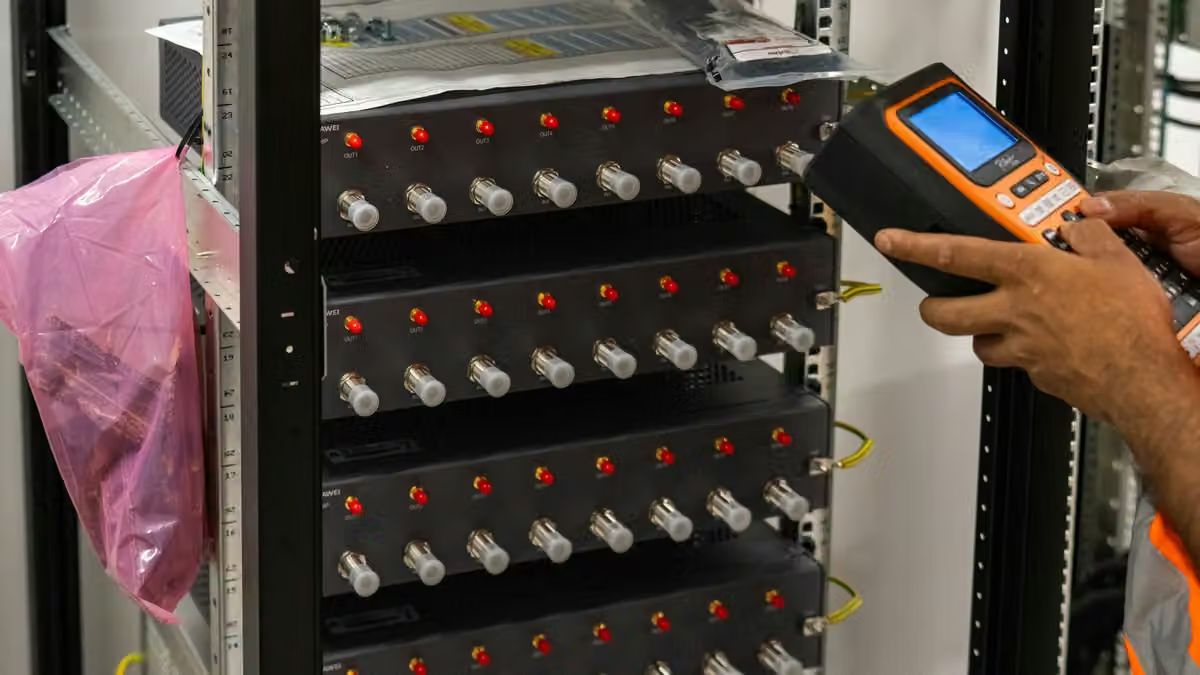
A forward deployed engineer solves customer problems in the customer’s own work setting. The engineer works with users, studies the real process, writes software, connects systems, and helps move the solution into production.
The word “forward” points to distance from the main product team. The engineer moves closer to the customer’s data, tools, rules, and daily work. The work may happen at the customer’s site, through remote sessions, or through a mix of both. The location matters less than the way the work is done.
The work starts with the real problem
A customer may ask for an AI assistant, a data tool, or a new workflow. That request is often too broad to build from directly. The forward deployed engineer helps turn it into a clear technical problem.
This means speaking with the people who use the process. It also means looking at the systems behind it. Data may sit in several places. Access may be limited. A process may include steps that no formal document explains. Small details can change what a useful solution looks like.
The engineer then creates a working plan. The plan may set the first users, the data sources, the system connections, and the measure of success. It should also show what will not be built yet. Clear limits help the team test a real idea instead of building an open-ended project.
This early work is technical, even when it looks like discovery. The engineer must judge whether the data is available, whether the systems can connect, and whether the requested result can be trusted. In AI work, the engineer may also define tests for accuracy, speed, safety, and failure cases.
From prototype to production
A forward deployed engineer does not stop at a demo. The main task is to make the solution work in the customer’s environment.
That can include writing application code, building data pipelines, connecting APIs, setting user permissions, and adding monitoring. An AI project may use retrieval-augmented generation, which lets a model search approved company information before it answers. It may also need evaluation tests that check whether answers are useful and correct.
The customer’s systems often include older software, special security rules, and data in uneven formats. These limits shape the engineering work. A solution that works in a clean test space may fail when it meets real records, real users, and real access controls.
The engineer works beside the customer team while these issues appear. Users may reject a feature because it slows their work. A manager may need a report that the first design did not include. A security team may block a connection. Each issue changes the plan.
This is why the role sits between product engineering and technical delivery. The engineer writes code, but also makes design choices with the customer. The engineer may explain trade-offs, test assumptions, and help users adopt the new workflow.
The boundary with other roles is not fixed. A solutions engineer may focus on technical sales and product fit. A consultant may focus on advice, process change, or project delivery. A forward deployed engineer is usually expected to build and ship working software. In some companies, the roles overlap.
The title also does not guarantee regular travel or daily office work at a customer site. Some teams work mostly on site. Others use remote collaboration. The stronger test is whether the engineer works directly in the customer’s operating context and owns technical delivery through production.
What the customer gains, and what the product team learns
The immediate goal is a working solution for one customer. The wider value comes from what the engineer learns during delivery.
Customer work can reveal missing product features, weak documentation, hard integration points, or common needs across several accounts. A good forward deployed engineering team sends these lessons back to the core product team. That feedback can lead to better tools, shared components, or changes to the product itself.
This creates a useful link between field work and product work. It can also create tension. A customer may need a custom feature that helps one account but adds long-term support costs. The engineer and product team must decide whether to build a one-off solution, improve the main product, or leave the request out of scope.
The role can also carry a high level of uncertainty. Customer needs change during delivery. The data may be worse than expected. A model may perform well in a test but poorly in daily use. A project can reach technical completion without becoming part of the customer’s normal work.
For that reason, production deployment is not the same as success. The solution must run safely, fit the workflow, and have clear owners after the engineer moves away. Training, documentation, monitoring, and support plans are part of the handoff.
A further limit is that “forward deployed engineer” has no single industry definition. One employer may expect broad software work and frequent customer contact. Another may place more weight on data integration, AI evaluation, or solution design. Job titles alone do not show the full scope.
The clearest signs are in the duties. Does the role write production code? Does it work with customer data and systems? Does it stay involved through deployment? Does it bring field lessons back to the product team? These details show what the job means in practice.
For someone studying the role, the central point is simple: a forward deployed engineer carries engineering work into the customer’s real setting. The role joins problem discovery, software building, system integration, and production delivery. Its value comes from closing the gap between a product’s stated promise and the customer’s actual conditions.
Its limits are just as real. On-site access cannot fix poor data, unclear ownership, weak product support, or a problem that has not been defined well. The engineer can reduce those gaps, but cannot remove every business or technical constraint.
That mix of field delivery and product feedback is the part worth tracking. FDE Alliance Brief follows AI engineering roles, hiring signals, alliance moves, and useful ecosystem research that show how this work is changing.